Data Communications and networking 3rd edition-Forouzan
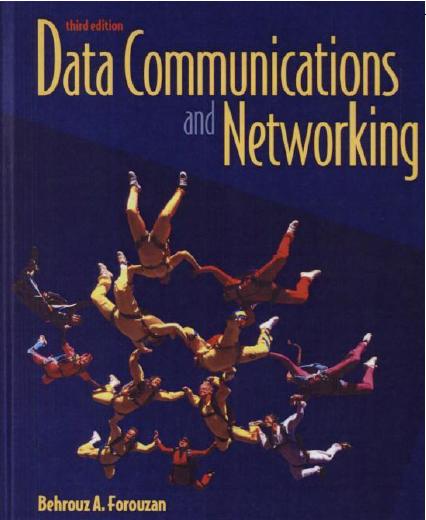
BOOK AND SOLUTIONS DOWNLOAD:-
http://cur.lv/hazfq
http://cur.lv/hazl6

| Chapter1.ppt | 1596416 | 07/25/2012 17:22:51 |
| Chapter10.ppt | 23597056 | 07/25/2012 17:22:51 |
| Chapter11.ppt | 9218048 | 07/25/2012 17:22:51 |
| Chapter12.ppt | 1681920 | 07/25/2012 17:22:51 |
| Chapter13.ppt | 2492416 | 07/25/2012 17:22:51 |
| Chapter14.ppt | 1367552 | 07/25/2012 17:22:51 |
| Chapter2.ppt | 1318912 | 07/25/2012 17:22:51 |
| Chapter3.ppt | 1183232 | 07/25/2012 17:22:51 |
| Chapter4.ppt | 1497600 | 07/25/2012 17:22:51 |
| Chapter5.ppt | 809472 | 07/25/2012 17:22:51 |
| Chapter9.ppt | 11161600 | 07/25/2012 17:22:51 |
| Introduction to Microcomputers.ppt | 2901504 | 07/25/2012 17:22:51 |
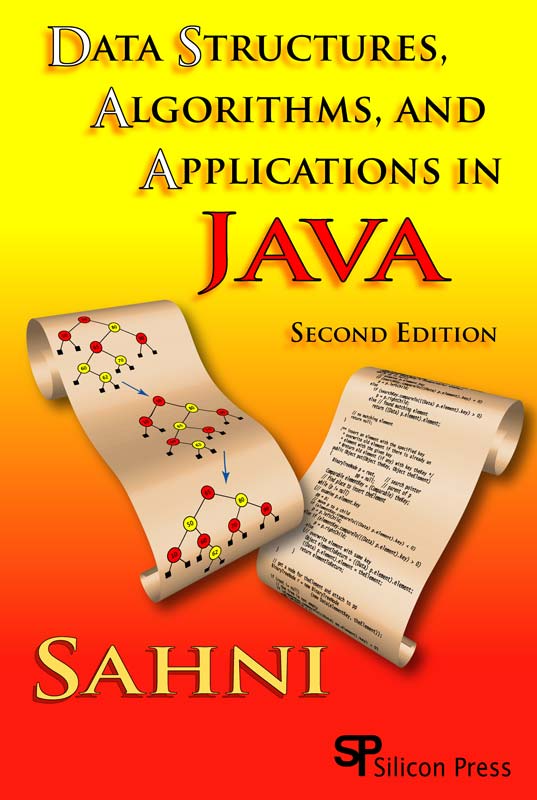
| Lecture | Content | Reading | Slides |
|---|---|---|---|
| 1 | Course overview and insertion sort. | Chapters 1 through 3. | Powerpoint |
| 2 | Insertion sort and practical complexities. | Section 3.5. | Powerpoint |
| 3 | Run-time measurement. | Chapter 4. | Powerpoint |
| 4 | Linear lists. | Sections 5.1-5.2. | Powerpoint |
| 5 | Array representation and array resizing. | Section 5.3. | Powerpoint |
| 6 | Walk through of code for ArrayLinearList. | Section 5.3. | Powerpoint |
| 7 | Iterators. Linked representation of a linear list. | Sections 5.3 and 6.1. | Powerpoint |
| 8 | Walk through of code for Chain. Head nodes, circular lists, doubly linked lists. | Sections 6.2 and 6.3. | Powerpoint |
| 9 | Simulated pointers and available-space lists. | Sections 7.1 and 7.2. | Powerpoint |
| 10 | Row-major and column-major indexing, and special matrices. | Sections 8.1, 8.2, and 8.3. | Powerpoint |
| 11 | Sparse matrices. | Section 8.4. | Powerpoint |
| 12 | Stacks--application to parentheses matching, towers-of-hanoi, railroad car rearrangement, and switchbox routing; array stacks. | Sections 9.1, 9.2, 9.5. | Powerpoint |
| 13 | Array and linked stacks. | Section 9.3 and 9.4. | Powerpoint |
| 14 | Nonapplicability of queues for parantheses matching, towers-of-hanoi, railroad problem with LIFO tracks, and switchbox routing. Application of queues to railroad problem with FIFO tracks, wire routing, and component labeling. Array and linked queues. | Sections 10.1-10.4, 10.5.1-10.5.3. | Powerpoint |
| 15 | Exam. | - | - |
| 16 | Dictionaries, linear list representation, and hashing. | Sections 11.1, 11.2, 11.3, and 11.5. | Powerpoint |
| 17 | Hashing and hash table design. | Section 11.5. | Powerpoint |
| 18 | LZW compression. | Section 11.6. | Powerpoint |
| 19 | Trees, binary trees, and properties. | Sections 12.1-12.3. | Powerpoint |
| 20 | Binary tree representation and operations. | Sections 12.4 and 12.5. | Powerpoint |
| 21 | Binary tree traversal methods-- preorder, inorder, postorder, level order. Reconstruction from two orders | Sections 12.6-12.8. | Powerpoint |
| 22 | Online equivalence classes. | Section 12.9.2. | Powerpoint |
| 23 | Application of priority queues to heap sort and machine scheduling. Min and max heaps. | Sections 13.1-13.3, 13.6.1, and 13.6.2. | Powerpoint |
| 24 | Initialization of min and max heaps. Height- and weight-biased leftist trees. | Sections 13.4.4 and 13.5. | Powerpoint |
| 25 | Winner and loser trees and application to k-way merging, run generation, and first-fit bin packing. | Chapter 14. | Powerpoint |
| 26 | Binary search trees and indexed binary search trees. | Sections 15.1-15.5. | Powerpoint |
| 27 | Definition of AVL trees. Graph applications and properties. | Sections 16.1, 17.1-17.3. | Powerpoint |
| 28 | Graph operations and representation. | Sections 17.4-17.7. | Powerpoint |
| 29 | Breadth-first and depth-first search. Application to path finding, connected components, and spanning trees. | Sections 17.8 and 17.9. | Powerpoint |
| 30 | Greedy method and application to bin packing, loading, and knapsack problems. | Sections 18.1, 18.2, 18.3.1, and 18.3.2. | Powerpoint |
| 31 | Exam. | - | - |
| 32 | Single source all destinations shortest paths algorithm. | Section 18.3.5. | Powerpoint |
| 33 | Kruskal's and Prim's minimum-cost spanning tree algorithms. | Section 18.3.6. | Powerpoint |
| 34 | Divide and conquer, and application to defective chessboard and min-max problem. Iterative min-max implementation. | Sections 19.1 and 19.2.1. | Powerpoint |
| 35 | Merge sort, natural merge sort, and quick sort. | Sections 19.2.2 and 19.2.3. | Powerpoint |
| 36 | Selection and closest pair of points. | Sections 19.2.4 and 19.2.5. | Powerpoint |
| 37 | Dynamic programming, 0/1 knapsack problem, recursive and iterative solutions. | Sections 20.1 and 20.2.1. | Powerpoint |
| 38 | Matrix multiplication chains, dynamic programming recurrence, recursive solution. | Section 20.2.2. | Powerpoint |
| 39 | Iterative solution to matrix multiplication chains. | Section 20.2.2. | Powerpoint |
| 40 | All pairs shortest paths. | Section 20.2.3. | Powerpoint |
| 41 | Single source shortest paths with negative edge weights. | Section 20.2.4. | Powerpoint |
| 42 | Solution space trees and backtracking. | Section 21.1. | Powerpoint |
| 43 | Branch and bound. | Section 22.1. | Powerpoint |
Topics
|
Lecture
Download
|
Introduction: course policies; Overview, Logic, Propositions
| |
Tautologies, Logical Equivalences
| |
Predicates and Quantifiers: "there exists" and "for all"
| |
Sets:
curly brace notation, cardinality, containment, empty set {, power
set P(S), N-tuples and Cartesian product. Set Operations: set
operations union and disjoint union, intersection, difference,
complement, symmetric difference
| |
Functions:
domain, co-domain, range; image, pre-image; one-to-one, onto,
bijective, inverse; functional composition and exponentiation; ceiling
and floor. Sequences, Series, Countability: Arithmetic and geometric
sequences and sums, countable and uncountable sets, Cantor's
diagonilation argument.
| |
Big-Oh, Big-Omega, Big-Theta: Big-Oh/Omega/Theta notation, algorithms, pseudo-code, complexity.
| |
Integers:
Divisors Primality Fundamental Theorem of Arithmetic. Modulii:
Division Algorithm, Greatest common divisors/least common multiples,
Relative Primality, Modular arithmetic, Caesar Cipher,
| |
Number Theoretic Algorithms: Euclidean Algorithm for GCD; Number Systems: Decimal, binary numbers, others bases;
| |
RSA
Cryptography: General Method, Fast Exponentiation, Extended Euler
Algorithm, Modular Inverses, Exponential Inverses, Fermat's Little
Theorem, Chinese Remainder Theorem
| |
Proof Techniques.
| |
Induction Proofs: Simple induction, strong induction, program correctness
| |
Recursion: Recursive Definitions, Strings, Recursive Functions.
| |
Counting Fundamentals: Sum Rule, Product Rule, Inclusion-Exclusion, Pigeonhole Principle Permutations.
| |
r-permutations: P(n,r), r-combinations: C(n,r),
Anagrams, Cards and Poker; Discrete probability: NY State Lotto,
Random Variables, Expectation, Variance, Standard Deviation.
| |
Stars and Bars.
| |
Recurrence
Relations: linear recurrence relations with constant coefficients,
homogeneous and non-homogeneous, non-repeating and repeating roots;
Generelized Includsion-Exclusion: counting onto functions, counting
derangements
| |
Representing
Relations: Subsets of Cartesian products, Column/line diagrams,
Boolean matrix, Digraph; Operations on Relations: Boolean, Inverse,
Composition, Exponentiation, Projection, Join
| |
Graph
theory basics and definitions: Vertices/nodes, edges, adjacency,
incidence; Degree, in-degree, out-degree; Degree, in-degree,
out-degree; Subgraphs, unions, isomorphism; Adjacency matrices. Types
of Graphs: Trees; Undirected graphs; Simple graphs, Multigraphs,
Pseudographs; Digraphs, Directed multigraph; Bipartite; Complete
graphs, cycles, wheels, cubes, complete bipartite.
| |
Connectedness, Euler and Hamilton Paths
| |
Planar Graphs, Coloring
| |
Reading Period. Review session TBA.
|


| Chapter | Formats | Last Updated |
| Part 1: Overview | ||
| 1. Introduction | pptx, pdf | Jan 7, 2011 |
| 2. Operating-System Structures | pptx, pdf | Jan 14, 2011 |
| Part 2: Process Management | ||
| 3. Processes | pptx, pdf | Jan 15, 2011 |
| 4. Threads | pptx, pdf | Jan 27, 2011 |
| 5. CPU Scheduling | pptx, pdf | Feb 7, 2011 |
| 6. Process Synchronization | pptx, pdf | Feb 22, 2011 |
| 7. Deadlocks | pptx, pdf | March 10, 2011 |
| Part 3: Memory Management | ||
| 8. Main Memory | pptx, pdf | March 10, 2011 |
| 9. Virtual Memory | pptx, pdf | March 31, 2011 |
| Part 4: Storage Management | ||
| 10. File-System Interface | pptx, pdf | March 31, 2011 |
| 11. File-System Implementation | pptx, pdf | May 19, 2011 |
| 12. Mass-Storage Structure | pptx, pdf | April 18, 2011 |
| 13. I/O Systems | pptx, pdf | April 23, 2011 |
| Part 5: Protection and Security | ||
| 14. Protection | pptx, pdf | April 23, 2011 |
| 15. Security | pptx, pdf | May 1, 2011 |
| Part 6: Distributed Systems | ||
| 16. Distributed System Structures | pptx, pdf | March 25, 2010 |
| 17. Distributed File Systems | pptx, pdf | March 25, 2010 |
| 18. Distributed Coordination | pptx, pdf | March 25, 2010 |
| Part 7: Special-Purpose Systems | ||
| 19. Real-Time Systems | pptx, pdf | March 25, 2010 |
| 20. Multimedia Systems | pptx, pdf | March 25, 2010 |
| Part 8: Case Studies | ||
| 21. The Linux System | pptx, pdf | May 1, 2011 |
| 22. Windows XP | pptx, pdf | March 25, 2010 |
| 23. Historical Perspective | No slides | . |
| Appendices | ||
| A. BSD UNIX | pptx, pdf | March 25, 2010 |
| B. The Mach System | No slides | . |
| C. Windows 2000 | pptx, pdf | March 25, 2010 |
